
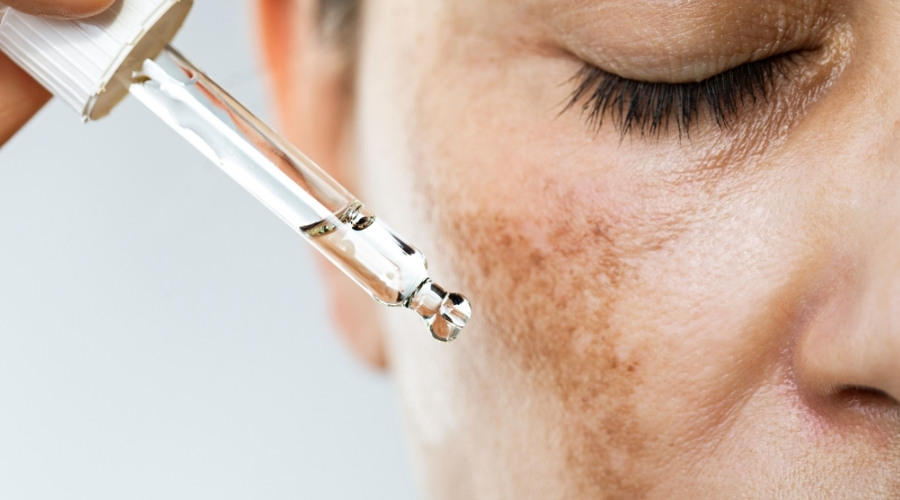
You apply SPF 50 sunscreen every morning, you haven’t gotten sunburned a single day, and yet, in the middle of summer, your skin tone looks more uneven and your spots are more pronounced. It’s not just your imagination. Freckles can darken with sun exposure, some spots may repigment, and others are a common sign of cumulative sun damage. The explanation isn’t that your sunscreen is defective, but rather that you assume applying this type of product is enough—regardless of how, when, or how much you use it—and that you overlook other essential sun protection measures.
Five reasons why you still get sunspots even when you use sunscreen
1. You’re Not Applying Enough
One of the most common mistakes is using less sunscreen than necessary, which significantly reduces its effectiveness. To achieve the SPF indicated on the label, studies use an application rate of 2 mg/cm² of skin.
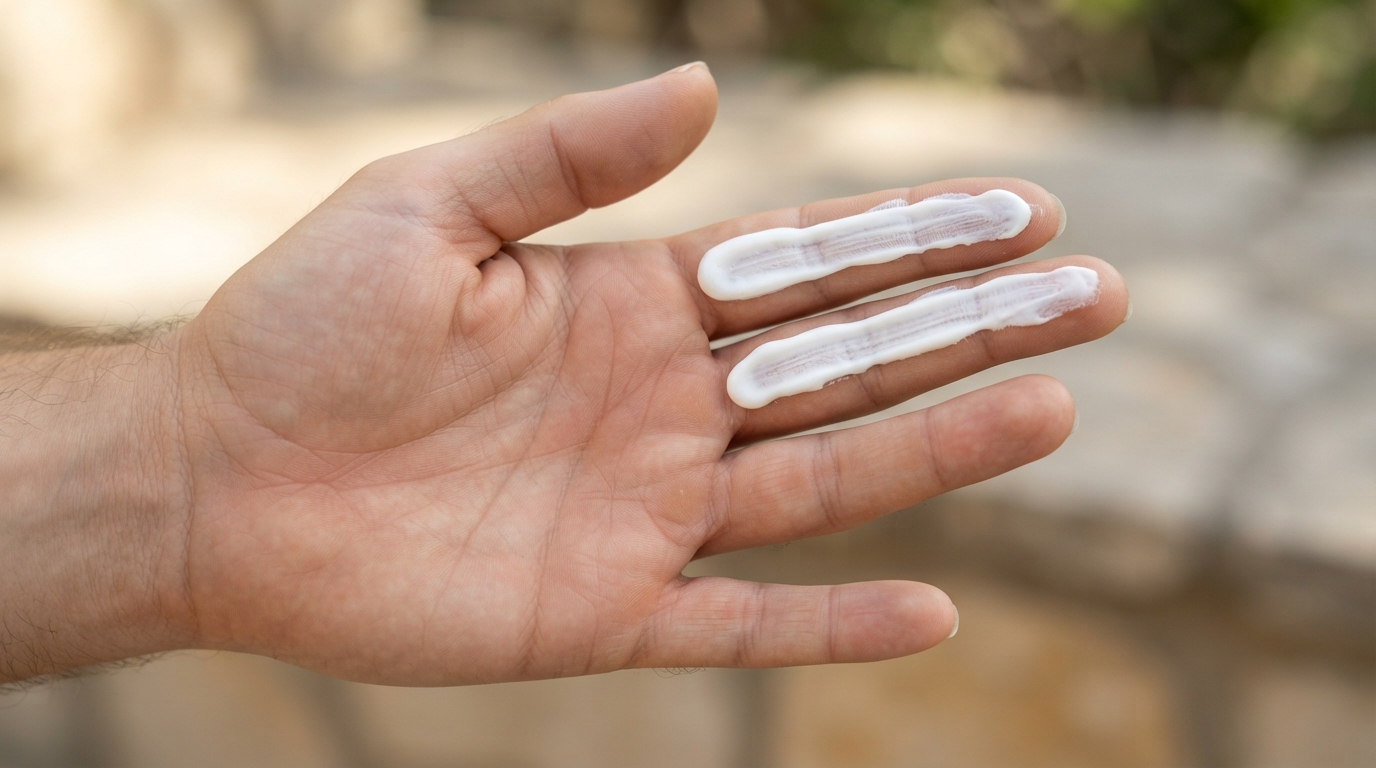
As a practical guide to approximating this amount, the “two-finger rule” is recommended. For example, two lines of product spread across two fingers for the face and neck. This is likely quite a bit more than most people usually use, and it’s what really makes a difference.
2. You’re not reapplying correctly
During prolonged sun exposure, the amount of sunscreen on your skin can decrease over time, so it’s necessary to reapply it approximately every two hours while you’re out in the sun—and especially after sweating, swimming, or drying off with a towel. Many people apply it only once a day, which leaves their skin unprotected for much of their time in the sun.
3. No sunscreen blocks all radiation
No sunscreen can block 100% of solar radiation; a small amount of radiation always reaches the skin, so it’s still possible to tan.
That’s why it’s important to supplement the use of sunscreen with other sun protection measures, such as wearing protective clothing, a hat, and sunglasses, or seeking shade—especially during the middle of the day.
In addition, it’s important to understand the meaning of the symbols on your sunscreen. The SPF indicates that your product protects against UVB radiation; however, for protection against UVA radiation, you need to look for this symbol inside a circle.
4. Visible light can have an effect
Visible light is the only light your eyes can see, and it is present throughout the day. In people with higher skin phototypes, exposure to blue light in particular can promote the development of hyperpigmentation by triggering melanin synthesis.
5. Melanocytes may become overactive
Melanocytes are the cells responsible for producing melanin and can be activated by sun exposure. In some cases, when this exposure becomes constant, melanocytes may remain overactive and steadily increase melanin production, promoting the appearance of spots.
| Type of radiation | Relationship to pigmentation | Impact on the skin |
| UVB | Stimulates melanin production | Delayed tanning and sunburn |
| UVA | Oxidation and redistribution of melanin | Immediate tanning and photoaging |
| Visible light | Stimulates melanin production | Appearance of spots in higher phototypes |
How to prevent dark spots from getting darker in the summer
- Use a broad-spectrum sunscreen with SPF 50+.
- Make sure your sunscreen protects against different types of radiation.
- Apply enough sunscreen to ensure adequate protection.
- Reapply, especially during intense sun exposure.
- Avoid direct sun exposure, especially during the middle of the day; seek out shaded areas and cover your skin with clothing and accessories to reduce direct exposure.
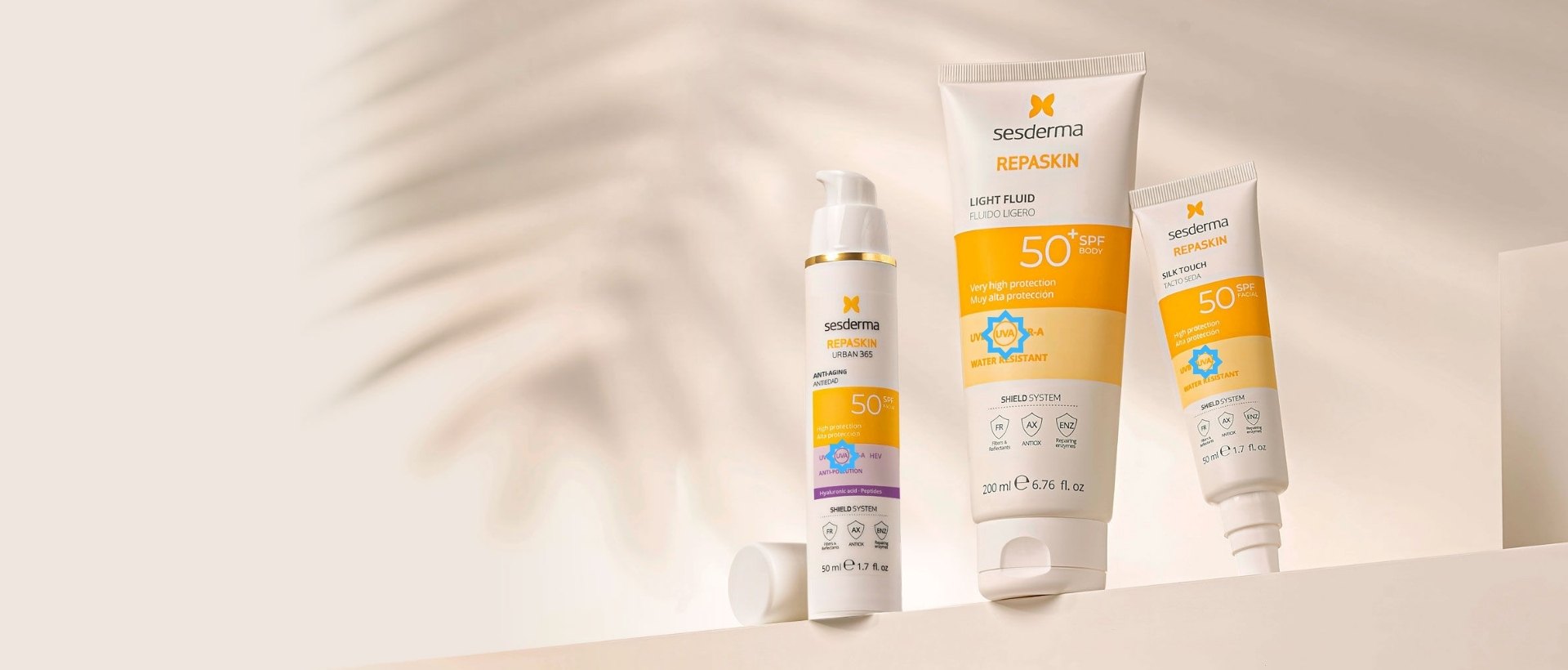
Just as important as applying sunscreen correctly is choosing a formula that protects against different types of solar radiation. Sesderma’s REPASKIN line combines broad-spectrum filters, antioxidants, and repairing enzymes to offer comprehensive protection, with different textures and finishes so you can choose the one that best suits your skin and preferences.
Can you use a depigmenting product in the summer?
Yes. Depigmenting products can be part of your summer routine, as long as the product is formulated and intended for continuous use.
In this context, AZELAC RU can complement this strategy with its depigmenting, antioxidant, and skin-renewing properties. Furthermore, while sunscreen helps reduce the impact of sun exposure on the skin, AZELAC RU addresses existing dark spots and helps prevent new ones from forming.
The key is to combine both approaches: daily, consistent sun protection + an appropriate depigmenting product to complement its action.
Frequently asked questions about sunspots and sunscreen
I use SPF 50 sunscreen every day—why have I still developed sunspots?
Because using SPF 50 sunscreen does not completely eliminate exposure to solar radiation, and actual protection also depends on the amount applied, reapplication, and the use of physical barriers.
Does SPF 50 provide twice as much protection as SPF 30?
No. SPF refers to the level of protection against UVB radiation, and the number indicates the ratio of the radiation dose required to cause erythema on the skin with versus without protection.
Can I use a depigmenting product in the summer?
Sí, siempre que la fórmula esté indicada para ello. En el caso de AZELAC RU está diseñado para su uso continuado durante todo el año, incluido el verano, y en todos los fototipos. Lo que no debe faltar en ningún caso es la fotoprotección diaria.
What is the best sunscreen for preventing dark spots from getting darker?
Look for a broad-spectrum sunscreen with an SPF of 50 or higher. If you’re prone to dark spots, you may want to consider sunscreens that offer protection against visible light and also contain depigmenting ingredients. You might be interested in REPASKIN URBAN 365 Depigmenting.
In the summer, managing dark spots involves addressing all the factors that can contribute to their appearance and darkening. That’s why, if you’re concerned about dark spots, effective sun protection—applied correctly and combined with a proper skincare routine and other measures—is the best strategy to help prevent pigmentation from intensifying.


