

Every summer, the same thing happens. Vacations begin, sun exposure increases, and the same question comes up: should I stop using retinol until September?
It is one of the most frequently asked questions in dermatology and dermocosmetics, but it is also surrounded by many myths. Some people claim that retinol is completely contraindicated during the summer months, while others say it can be used without any problems. Who is right?
As is often the case with skin care, the answer is not a simple yes or no.
The first thing to understand is that summer itself does not make retinol use incompatible. What really determines whether you can continue using it is the condition of your skin, how long you have been using this ingredient, your level of sun exposure, and something that is discussed far less often: how the retinoid is formulated.
Why is there a myth that retinol cannot be used in summer?
Retinol belongs to the retinoid family, which consists of vitamin A derivatives widely used for their ability to improve some of the most visible signs of skin aging. It supports skin renewal, helps smooth wrinkles, improves texture, evens skin tone, and helps reduce the appearance of dark spots and other imperfections.
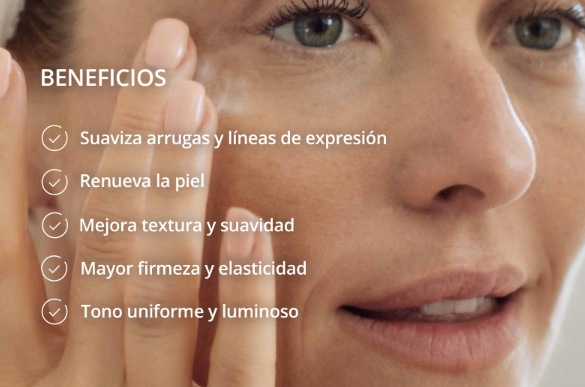
Because it speeds up the skin’s natural cell renewal process, it is common to experience some signs of adjustment during the first few weeks of use, such as mild dryness, tightness, or slight flaking. This is known as retinization and is part of the skin’s adaptation process to retinoids.
This is where the confusion usually begins, because many people assume that this renewal process makes retinol a photosensitizing ingredient. However, that is not exactly what happens.
What really happens to your skin when you use retinol
To understand why retinol requires certain precautions in summer, it is important to first understand how it works.
Our skin is constantly renewing itself. Naturally, cells are formed in the deeper layers of the epidermis and slowly move upward until they reach the surface, where they are eventually shed. As we age, this process slows down, which contributes to the buildup of aging cells and the appearance of wrinkles, dark spots, dullness, and uneven texture.
Retinol works by stimulating this renewal process, helping new cells reach the skin’s surface more quickly. As a result, the skin looks more even, radiant, and smooth. It also supports a gradual improvement in the appearance of wrinkles and dark spots.
However, stimulating epidermal renewal requires an adjustment period. During the first few weeks of use, temporary signs of irritation may appear, including redness, dryness, flaking, or a stinging sensation. The intensity of this response depends on several factors, including the type and concentration of the retinoid, how often it is applied, individual skin sensitivity, and the formulation used.
This is where a difference that is rarely explained to consumers becomes especially important, because it helps clarify why not all retinoid products provide the same user experience.
Not all retinols work the same way: why formulation matters
When we talk about retinol, we often focus only on its concentration: 0.1%, 0.3%, 0.5%, and so on. However, the effectiveness and tolerability of a retinoid do not depend solely on the amount of active ingredient in the formula. The way that ingredient is delivered to the skin also makes an important difference.
Free retinol: faster release
In conventional formulations, retinol is present in its free form within the formula. When applied to the skin, the active ingredient becomes available almost immediately.
This rapid release allows retinol to begin working right away, but it may also trigger a stronger reaction, especially in sensitive skin or during the first few weeks of use.
Liposomal retinoids: gradual release for improved tolerability
One way to improve retinoid tolerability is not to change the active ingredient itself, but rather the way it is delivered to the skin. At Sesderma, we have spent decades researching how to improve the effectiveness of active ingredients without compromising skin comfort. This research led to Nanotech, a technology that encapsulates active ingredients in liposomes—nanostructures capable of carrying ingredients such as retinoids to the layers where they need to work.
What does this mean in practice?
- High tolerability. Because liposomes are similar to cell membranes, the skin receives the active ingredient in a more natural way without disrupting it.
- Greater effectiveness. Encapsulation protects the active ingredient and helps it penetrate into deeper layers of the skin, allowing it to reach the area where it needs to work.
- Gradual action. It provides immediate and long-term benefits by allowing the active ingredients to be released in a controlled manner.
This does not mean that a liposomal retinoid completely eliminates the possibility of irritation, but it may help improve skin tolerability by promoting a more gradual release of the active ingredient and reducing its immediate exposure on the skin’s surface.
So, can you use retinol in summer?
The answer depends on your skin, your experience with this ingredient, and how much sun exposure you expect. Although summer does not automatically require you to stop using it, adjusting your routine to your circumstances is recommended.
If you have never used retinol
If you are thinking about adding this ingredient to your routine for the first time and know that you will spend much of the summer outdoors, with long days at the beach, pool, or doing activities in the sun, it is best to wait until a time of year with less sun exposure.
If you have been using retinol for months
If retinol is already part of your routine, you do not necessarily need to stop using it during the summer. The key is to use it correctly: apply it at night, always pair it with broad-spectrum sun protection during the day, and adjust how often you use it based on your skin’s tolerance and your level of sun exposure.
How to use retinol safely in summer
- Use it only at night.
- Do not neglect sun protection. Apply sunscreen every morning and reapply whenever you are directly exposed to the sun.
- Avoid using it if you expect intense sun exposure the following day, and space out applications as needed.
- Increase hydration.
- Pay attention to your skin. If you notice increased sensitivity, it is best to take a temporary break and resume treatment once your skin has fully recovered.
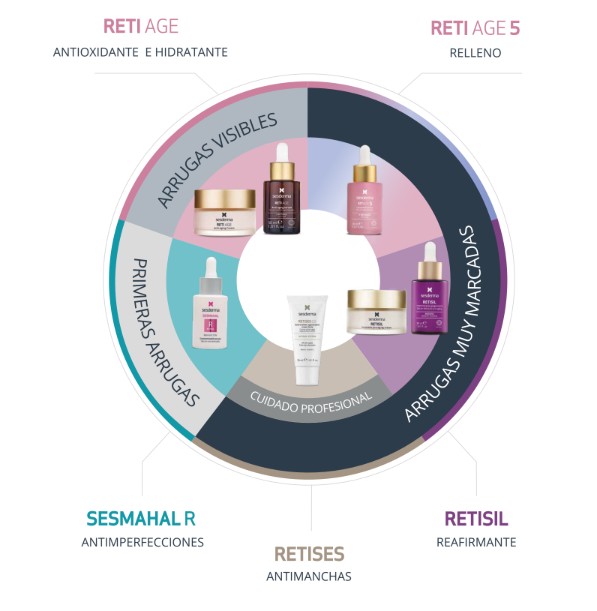
Which Sesderma retinoid should you choose for your skin’s needs?
Frequently asked questions about retinol and sun exposure
Can retinol cause dark spots if I spend time in the sun?
Retinol does not directly cause dark spots. However, because it promotes skin renewal, the skin may be more vulnerable, and excessive sun exposure can increase the risk of irritation.
Should I use less retinol in summer?
It depends on your destination, expected sun exposure, and your skin’s tolerance. If you will be outdoors for many hours, you can space out applications or take a short break. Keeping your skin barrier healthy is more important than following a rigid schedule.
Can I use retinol after being in the sun?
It is recommended that you avoid using retinoids before and after intense sun exposure.
Can I use it every night in summer?
Yes, as long as the formula is intended for that frequency, your skin is fully accustomed to it, and you are not experiencing intense sun exposure. Even so, using retinol every day is not essential for maintaining optimal results.
Ultimately, the key is not to stop using retinol simply because it is summer, but to adapt its use to your skin’s needs and your level of sun exposure. Maintaining a healthy skin barrier, using sun protection consistently, and respecting your individual tolerance are essential for getting the benefits of retinol while minimizing the risk of irritation.


