
Almost every guide presents azelaic acid as an all-rounder for acne and rosacea, but its most valuable quality lies elsewhere: it targets dark spots without disrupting healthy skin. It slows down melanin production exactly where it has become overactive, leaving the rest of the complexion untouched. Here’s what it’s for, which types of blemishes it treats best, and how to use it according to your skin type
Azelaic acid: what it’s for and how to use it
Azelaic acid is one of those actives that can do a great deal for your skin: it helps improve dark spots and uneven tone, the imperfections associated with blemish-prone skin, and it’s also interesting for skin prone to redness.
Want to know if azelaic acid is right for you, how to incorporate it into your routine and which actives you can combine it with? Here’s everything you need to know.
What is azelaic acid?
Azelaic acid is an active ingredient with depigmenting and anti-inflammatory properties, used in cosmetics to improve a range of skin concerns. Its versatility is precisely one of its main advantages. It’s also an active that can be incorporated into your routine all year round, always alongside adequate sun protection.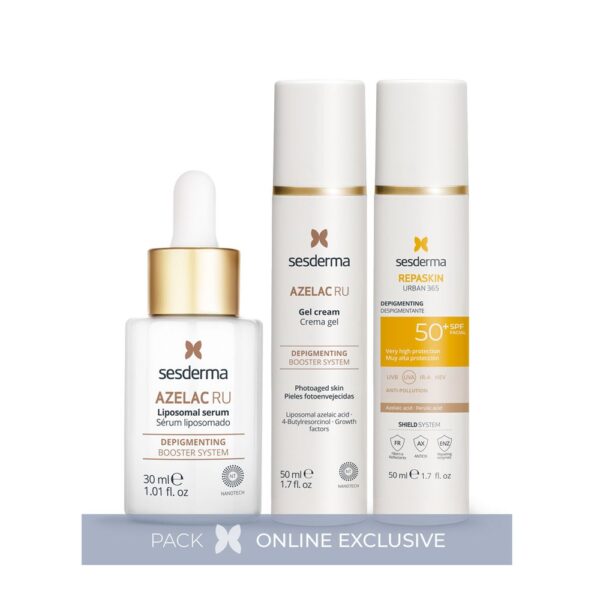
What is azelaic acid used for?
Azelaic acid is a multifunctional active. Its main benefits include:
Helps improve dark spots and uneven tone
It helps reduce the appearance of hyperpigmentation and achieve a more even, radiant tone.
Helps improve imperfections
When a spot leaves a dark or reddish mark behind, azelaic acid can help improve its appearance and gradually restore a more even tone.
Helps calm the skin
Its calming action also makes it an interesting active for skin prone to redness or sensitivity.
So rather than focusing on a single concern, azelaic acid stands out for its ability to support routines where several needs overlap.
Does azelaic acid work on dark spots?
Yes. This is one of the best-known uses of azelaic acid, and it can be particularly useful for improving the appearance of hyperpigmentation and skin imperfections. In the case of melasma, it can form part of a routine aimed at improving and maintaining the appearance of the skin, always alongside adequate sun protection.
It’s important to have realistic expectations: dark spots don’t disappear overnight. Consistency and sun protection are essential for achieving gradually more even-looking skin.
Who is it recommended for?
Azelaic acid can be incorporated into the routine of different skin types. Choosing the right formula and texture allows it to be adapted to each person’s specific needs.
Oily or combination skin
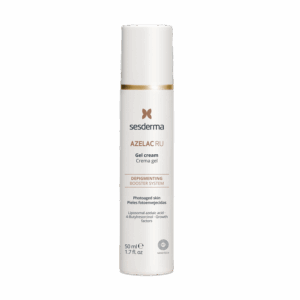
It can be a great ally when you’re looking to treat imperfections, marks and uneven tone at the same time. Lightweight textures are especially comfortable for this skin type, such as AZELAC RU Cream Gel
Dry or normal skin
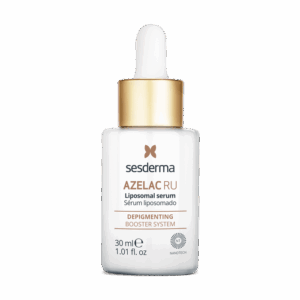
Here, a concentrated serum followed by a nourishing cream works best. The AZELAC RU Liposomal Serum is applied with 3 or 4 drops onto clean skin, in the morning and/or at night, and then sealed in with your usual cream.
Sensitive skin or skin prone to redness
It’s best to introduce it gradually and see how your skin responds. If redness is your main concern, the AZELAC range for redness is the ideal formula.
Higher phototypes and darker skin tones
On these skin tones, any irritation can leave a new mark, so the selectivity of azelaic acid avoids a patchy-tone effect. The entire AZELAC RU range is suitable for all phototypes.
How to use azelaic acid
Incorporating it into a routine doesn’t have to be complicated. A simple routine can follow these steps:
1. Cleansing
Start with clean skin to prepare your face for the next steps.
2. Azelaic acid-hydration
Choose the texture best suited to your skin’s needs and apply the product following the instructions on its formula.
3. Sun protection
In the morning, always finish with a broad-spectrum sunscreen. This is especially important when your goal is to improve dark spots and maintain an even tone.
You don’t need to use lots of products to put together a good routine. When it comes to actives, consistency tends to matter more than piling on extra steps.
What actives can it be combined with?
Azelaic acid can form part of routines with other actives, but combining more products doesn’t necessarily mean better results.
It can be used alongside ingredients such as:
- Tranexamic acid, especially in routines aimed at improving dark spots.
- Vitamin C, to boost antioxidant care and radiance.
- Niacinamide, a versatile active that helps care for the skin barrier and overall appearance of the skin.
- Retinoids, to complement routines aimed at improving skin texture and softening the appearance of fine lines.
When do results start to show?
With consistent use, skin can start to look more even after several weeks, although the time needed depends on the concern you’re treating, the formula used and the characteristics of each skin.
Remember that if your goal is dark spots, daily sun protection is just as important as the depigmenting routine itself.
Azelaic acid: frequently asked questions
Can azelaic acid be used in summer?
Yes. Azelaic acid isn’t a photosensitising active, so it can form part of your routine all year round.
Can azelaic acid be used every day?
Yes, although it depends on the formula and each skin’s tolerance.
Is it normal for azelaic acid to tingle?
A slight tingling or stinging sensation can appear at first, especially on sensitive skin. If you notice intense stinging, irritation or persistent redness, stop using it and consult a professional.
Can azelaic acid be combined with retinol?
Yes, but both are actives that can feel intense for some skin types. If you use them in the same routine, pay close attention to tolerance and introduce them gradually.
Can it be used during pregnancy?
Topical azelaic acid has a favourable safety profile during pregnancy. Even so, it’s recommended to consult a healthcare professional before adding it to your routine, especially during pregnancy and breastfeeding.
If you’re still not sure where to start, explore our facial blemish products. Azelaic acid isn’t the flashiest active on the market, but it’s one of the most reliable for improving dark spots without irritating the skin, for any phototype and all year round. Choose the right texture for your skin, apply it daily, and don’t skip the sun protection.


